
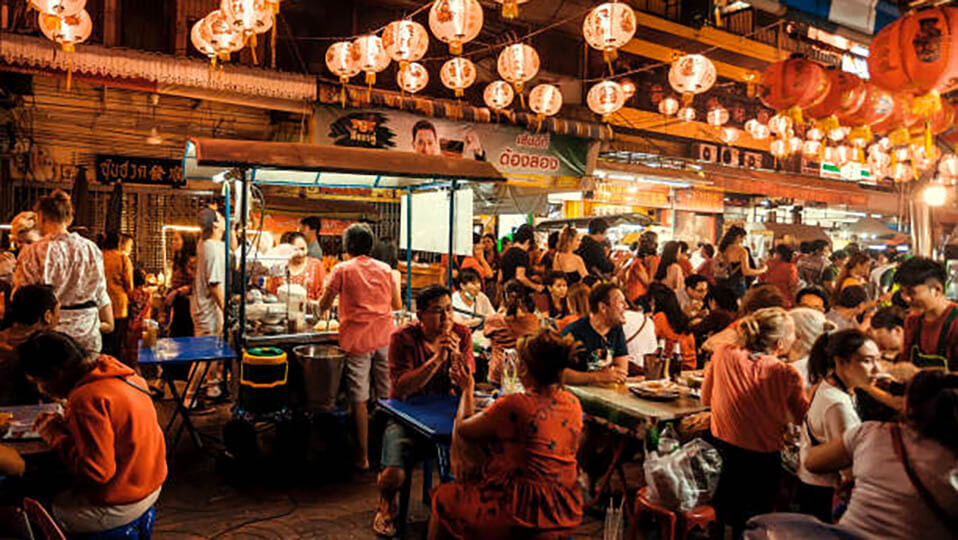
Bangkok is a great city for travelers who care about food because you don’t have to choose one version of it. You can eat grilled pork skewers on the street, sit down for noodles in a tiny shop, try regional Thai dishes in a casual restaurant, then book a tasting menu that treats Thai cooking with the same attention you’d expect in any major dining city. The range is what makes eating here so good.
For some visitors, searching for a fine dining Bangkok Michelin course is part of that wider food trip, not a replacement for street food. A tasting menu gives you another way to understand Thai cooking, especially when the focus is on seasonal ingredients, careful technique, regional produce and the order of the courses. That doesn’t make it more real than a market meal or a bowl of boat noodles. It just shows a different side of the same food culture.
Street food is still the obvious place to start. Bangkok’s everyday food scene is built around quick meals, regular vendors and dishes that fit into normal city life. You might have chicken rice near an office building, som tam from a cart, moo ping before work, or stir-fried noodles from a shop that fills up at lunchtime. These meals aren’t designed to impress anyone. They work because they’re familiar, fast and full of flavor.
Casual restaurants add another layer. This is where you start to see how wide Thai food really is. Central Thai dishes are only part of the picture. Bangkok also has northern food, Isaan food, southern curries, Thai-Chinese cooking, seafood restaurants and old family-run places that have built their reputation over years. A traveler who only eats pad Thai and green curry will still enjoy the city, but they’ll miss a lot of what makes Bangkok such a strong food destination.
Fine dining sits on top of that, but it shouldn’t feel separate from it. The best Thai fine dining menus take familiar ideas and give them more time, space and detail. A sauce might have deeper balance. A local ingredient might be used in a more careful way. A regional dish might be presented with a story behind it, rather than just appearing as one plate among many. That kind of meal can slow the whole experience down, which is useful in a city where so much food is eaten quickly.
The best way to eat in Bangkok is to mix the levels. Have the street food, try the old-school restaurants, look for regional dishes you don’t already know, and leave room for one meal where the cooking is more structured. Bangkok is interesting because all of those things can belong in the same trip.
