
In the fiercely competitive hospitality landscape, culinary excellence alone is often not enough to guarantee long-term viability. Diners are surrounded by countless dining options, ranging from neighborhood bistros to high-end tasting rooms and fast-casual concepts. To stand out in a saturated market, an establishment must offer something distinct that cannot be replicated down the street. This defining anchor is the signature dish.
A true signature dish serves as the culinary embodiment of a restaurant identity. It acts as an organic marketing engine, a primary driver of word-of-mouth recommendations, and a reliable revenue generator that draws first-time visitors while securing repeat business. Crafting a menu item with this level of staying power requires far more than throwing expensive ingredients together or chasing fleeting social media trends. It demands a deliberate balance of culinary innovation, operational practicality, sensory storytelling, and consistent execution.
Defining the Philosophy of a Signature Dish
Before stepping into the kitchen to experiment with ingredients, a culinary team must understand what a signature dish actually represents. It is not merely the most expensive item on the menu, nor is it necessarily the most technically complex preparation a chef can execute.
A signature item captures the spirit, culinary point of view, and atmosphere of the entire restaurant in a single plate. When guests think of the restaurant, this is the dish that immediately comes to mind. It bridges the gap between the chef creative vision and the diner desire for comfort, indulgence, or discovery.
Whether it is an ultra-crispy double-fried chicken sandwich with a proprietary fermented glaze, a handmade pasta tossed in a twenty-four-hour braised ragu, or a theatrical tableside dessert, the dish must offer an unforgettable hook that leaves a lasting sensory memory.
Building on Flavor Contrast and Structural Balance
At the core of every iconic dish lies a masterful understanding of flavor chemistry and textural balance. Exceptional culinary creations rarely feature one-dimensional profiles; they succeed because they trigger multiple taste receptors simultaneously.
The Dynamics of Flavor Layering
A memorable dish moves through distinct stages on the palate, keeping the diner engaged from the first bite to the last:
-
Balancing Richness with Acidity: Heavy, savory elements such as braised pork belly, rich cream emulsions, or duck confit require sharp acidic counterpoints like pickled mustard seeds, citrus reductions, or aged vinegars to cut through the fat and prevent palate fatigue.
-
Integrating Umami Depth: Incorporating natural glutamates from sources like aged cheeses, fermented chili pastes, roasted bone broths, dried mushrooms, or black garlic creates a deeply satisfying, savory backbone that lingers.
-
Subtle Sweet and Salty Interplay: Adding a delicate touch of sweetness, such as hot honey, caramelized alliums, or fruit gastriques, accentuates salty and savory components, elevating a simple savory preparation into a multifaceted profile.
Engineered Textural Contrast
Texture is just as critical to human enjoyment as taste. A dish composed entirely of soft elements quickly becomes monotonous, regardless of how well it is seasoned.
Great signature items intentionally incorporate contrasting structural layers:
-
Crispy, golden exteriors yielding to tender, juicy interiors.
-
Velvety purees topped with toasted nut crumbles, fried alliums, or delicate herb tuiles.
-
Chewy, toothsome handmade noodles bathed in glossy, clinging sauces accented by crunchy seasonal garnishes.
Sourcing Unique, High-Quality Ingredients
A signature dish should feel proprietary, giving diners a compelling reason to visit your specific establishment rather than cooking at home or patronizing a rival eatery. Sourcing distinct ingredients builds an immediate competitive moat.
Local Terroir and Micro-Seasonal Partnerships
Forging direct partnerships with local farmers, foragers, artisanal cheese makers, and fisheries allows a kitchen to secure ingredients unavailable to broadline food distributors:
-
Heritage Crop Varieties: Utilizing heirloom produce, regional grains, or unique botanical herbs introduces distinctive flavors and deepens local agricultural connections.
-
Hyper-Fresh Seafood and Game: Sourcing day-boat catches or humanely raised local meats ensures superior baseline quality that shines through minimal preparation.
-
Seasonal Adaptability: Establishing relationships with local purveyors allows a restaurant to tell a seasonal story, celebrating peak freshness that guests anticipate all year.
Proprietary In-House Processing and Fermentation
Creating proprietary ingredients in-house ensures that competitors cannot simply purchase the same components to copy your concept.
Developing custom spice blends, barrel-aging vinegars, cultivating house sourdough starters, fermenting custom hot sauces, or dry-aging meats in specialized temperature-controlled cases creates unique flavor footprints that belong exclusively to your brand.
Designing with Operational Feasibility in Mind
A brilliant recipe is completely useless if the line cannot execute it during a chaotic Friday night rush. Operational sustainability is the unheralded foundation of every successful signature dish.
Scalability on the Line
A signature item will naturally account for a disproportionate percentage of total kitchen orders. The dish must be engineered to withstand high-volume demand without causing ticket bottlenecks:
-
Extensive Pre-Service Preparation: Components like braises, purees, infused oils, and pasta doughs should be fully prepped and portioned before the doors open, minimizing last-minute assembly.
-
Rapid Final Pickup: The final cooking and plating process on the line should ideally take under four to six minutes, requiring minimal pans and straightforward burner access.
-
Cross-Station Harmony: The assembly should distribute labor reasonably across the line rather than overwhelming a single cook on the sauté or grill station.
Preserving Consistent Cost Margins
Profitability cannot be sacrificed for culinary novelty. A signature dish must maintain a healthy food cost percentage to remain a permanent fixture on the menu:
-
Elevating Everyday Cuts: Many of the most famous dishes worldwide transform humble, cost-effective ingredients, such as short ribs, pork shoulders, or root vegetables, into luxury experiences through technique and time.
-
Minimizing Kitchen Waste: Designing the dish to utilize byproducts or cross-utilize inventory across other menu items protects the bottom line against ingredient spoilage.
Visual Identity and Modern Table Presentation
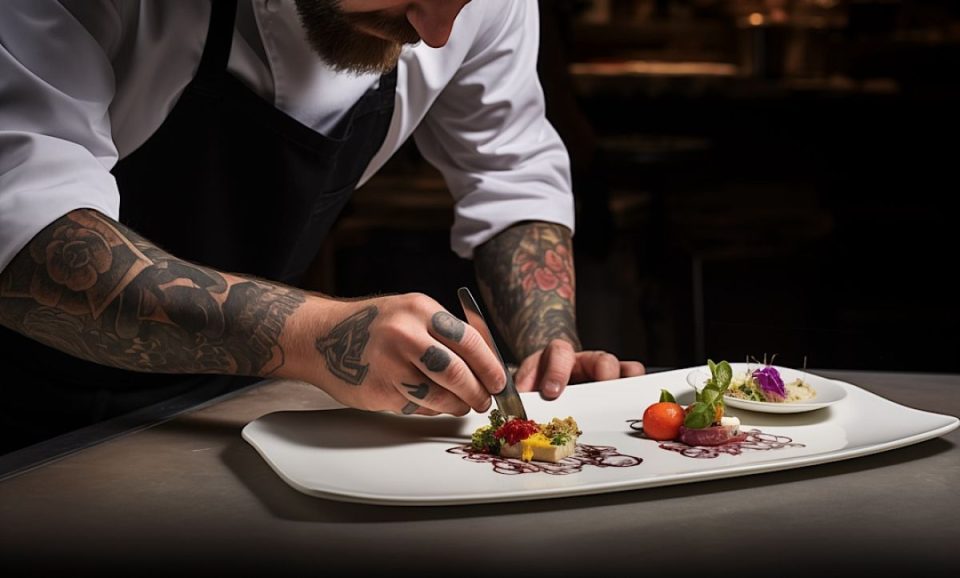
Human beings consume food visually long before lifting a fork. In an era where digital discovery shapes consumer choices, a signature dish must possess an unmistakable visual identity that stands out both across the dining room and on digital screens.
Intentional Plating and Negative Space
Plating should be deliberate and functional rather than fussy or over-garnished:
-
Custom Dishware: Collaborating with local ceramicists or selecting unique vintage stoneware provides a distinctive frame that complements the colors and textures of the food.
-
Vibrant Color Theory: Pairing deep roasted tones with bright herb oils, micro-greens, or vibrant edible accents draws the eye and creates high visual contrast.
-
Clean Geometry: Using structural layering, clean sauce drizzles, and intentional negative space elevates the perception of quality without making the dish feel unapproachable.
Theatrical Tableside Finishing
Introducing an interactive or dynamic element creates a memorable moment in the dining room that captures attention:
-
Pouring warm, aromatic broths or glossy reductions tableside from ceramic carafes directly over plated proteins.
-
Flambéing dishes or torching garnishes at the table for an immediate burst of aroma and visual excitement.
-
Carving large-format roasts or cracking through salt-baked crusts in front of guests, turning dining into shared entertainment.
Frequently Asked Questions
How long should a restaurant test a new dish before declaring it a signature item?
A dish should run as an off-menu daily or weekend special for at least four to eight weeks before being promoted to signature status. This testing window allows the culinary team to gather direct customer feedback, refine prep workflows, train line cooks on consistent execution, and analyze actual ingredient cost margins under high-volume pressure.
Can a restaurant have more than one signature dish on its menu?
Yes, but restraint is critical. A well-rounded menu can support two to three signature items across different categories, such as a standout appetizer, a defining main course, and an iconic dessert or craft cocktail. Having too many claimed signature items dilutes the brand identity and confuses guests looking for the core highlights of your concept.
What should a chef do if a planned signature dish fails to sell well?
If a dish fails to connect with guests, the chef should first assess front-of-house communication to ensure servers are describing the item effectively. Next, evaluate whether the price point matches guest expectations and gather honest feedback on flavor balance and portion size. If interest remains low after minor tweaks, remove the item without hesitation and begin developing a fresh concept; forcing an unpopular dish hurts brand credibility.
How does a restaurant balance modern food trends with the longevity of a signature dish?
Avoid building a signature item entirely around short-lived visual fads that lack underlying flavor value. Instead, focus on timeless culinary principles of balance, texture, and high-quality ingredients, incorporating contemporary elements only if they genuinely enhance the flavor, quality, or story of the dish.
How can front-of-house staff help establish and promote a signature dish?
Service staff play a pivotal role in establishing signature items through natural, enthusiastic storytelling. Educating servers about ingredient origins, cooking techniques, and the chef inspiration allows them to guide undecided guests confidently toward the signature dish during initial menu introductions.
Is it risky to change or modernize an established signature dish over time?
Modifying an established favorite carries risk because regular guests develop strong emotional attachments to familiar tastes and presentations. If updates are necessary due to ingredient availability or culinary evolution, introduce changes gradually, or offer the updated version as a seasonal variation while preserving the core flavor profile that made the dish famous initially.
How do dietary restrictions impact the creation of a modern signature dish?
Designing a signature dish that can be easily modified for common dietary needs, such as gluten-free or dairy-free preferences, significantly widens its appeal. Chefs can engineer base sauces, marinades, and components to be naturally inclusive from the start without compromising the rich, signature flavor profile for unrestricted diners.
